
What does a good advert look like? A plain-English guide for great ads
Part of our series on growing your brand without a giant budget.
Ask ten people what makes a good advert and you will get ten different answers. One will say it made them laugh, another that it had a great song, a third that it simply told them what was on offer. They are all a little bit right, which is precisely what makes the question so slippery.
The good news is that decades of research have quietly settled a lot of the argument. We now know a great deal about what tends to make advertising work, and much of it holds true whether you are buying a page in a national newspaper, thirty seconds on the radio, or a spot in the ad break. So let us take a friendly look under the bonnet. First at the principles that apply to almost any advert, and then at what changes when you move between print, radio and television.
The things every good advert has in common
Before we split things by medium, it helps to know the handful of qualities that show up in effective advertising again and again. Get these right and you are most of the way there, whatever the channel.
Say one thing, and say it clearly
The single most common mistake in advertising is trying to say too much. When a brief carries five messages, an audience usually remembers none of them.
Mark Ritson, one of the most widely read voices in marketing, puts it bluntly. Good advertising trades in obviousness, simplicity and clarity, because the market is mostly not paying attention, not interested and not especially involved. His advice is to distil your strategy down to a single, impactful idea and let everything else flow from it. Complexity, as he says, is a crutch. Clarity wins.
So before you worry about colours, jingles or scripts, decide the one thing you most want a person to feel or remember. If your advert does only that, but does it well, it is already ahead of most.
Lead with emotion, not just information
We like to think we buy rationally. We mostly do not. A large body of work by the IPA, drawing on the analysis of Les Binet and Peter Field, shows that campaigns built on emotion tend to outperform those built purely on rational messages, especially over the longer term. Emotion is what gets an advert felt, shared and remembered, long after the specific claim has faded.
This does not mean every advert needs to bring a tear to the eye. It means the feeling an advert creates is doing more of the heavy lifting than the facts it lists.
Make it unmistakably yours
Here is a sobering thought. An advert that everyone enjoys but nobody links to your brand is a gift to your competitors.
This is where brand codes come in, also known as distinctive brand assets. Coined by Professor Byron Sharp and Professor Jenni Romaniuk at the Ehrenberg-Bass Institute, the idea is simple. Over time, brands build a palette of recognisable cues: a colour, a logo, a shape, a character, a tagline, a piece of music. Used consistently, these codes let people recognise you in an instant, even before they have read your name. Romaniuk’s research measures them on two qualities: how famous they are, meaning how many people correctly link the asset to you, and how unique they are, meaning how few rivals share them. The assets that score well on both are the ones worth protecting and repeating.
For a brand growing on a careful budget, this is genuinely liberating. You do not need a vast media spend if you use your codes so consistently that every pound of advertising compounds the last, rather than starting from scratch each time.
Do not forget the power of sound
Sound is one of the most underused assets in marketing, and the evidence for it is striking. Ipsos research has found that audio assets can be several times more effective than visual ones at driving strong advertising performance, and that a well-crafted sonic logo, a short, ownable piece of sound, was among the single most effective distinctive assets of all.
It makes intuitive sense. A sound can reach us when our eyes are elsewhere, and music connects to memory and emotion in a way that words alone rarely manage. Sonic assets matter most on radio and television, of course, but a consistent audio signature is something every growing brand should consider owning.
Now for the differences: print, radio and TV
Those principles form the backbone. But each medium has its own character, and a good advert plays to the strengths of the channel it lives in. Here is what changes.
Print: the headline and the layout do the work
Print is a considered, trusted medium. People choose to sit with a newspaper or magazine, and they give the page more attention than almost any other format. Newsworks research shows that ad dwell time is markedly higher in a hard news environment, and that adding newspapers to a campaign can make the whole thing significantly more effective, boosting the pulling power of both television and digital display alongside it.
Two things make a print advert work.
The first is the headline. Study after study, including work summarised by WARC, points to the headline as the single most important element of a press ad. If it fails to earn a glance, the rest of the advert goes unread. So it is worth spending a disproportionate amount of time getting those few words right.
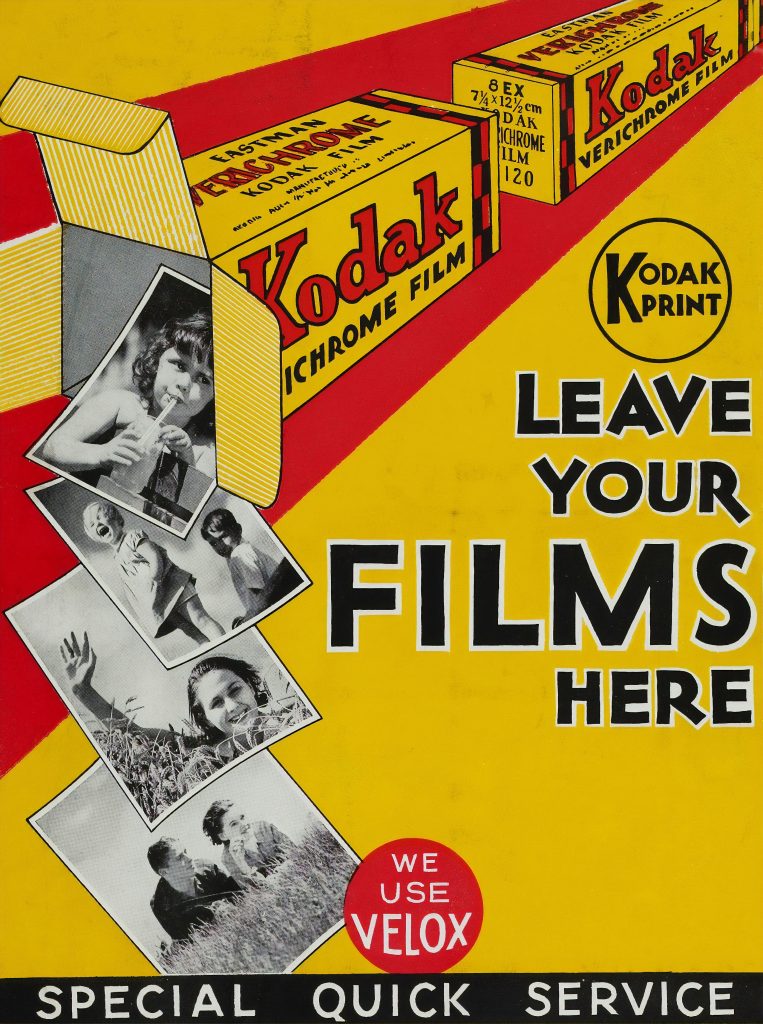
The second is design. Good print design is not decoration, it is direction. The core principles, balance, contrast, alignment, visual hierarchy and generous white space, exist to guide the reader’s eye to the right place in the right order. A cluttered advert makes the reader work. A well-designed one leads them gently from headline, to image, to message, to what you would like them to do next. When in doubt, remove something. Space is what lets the important elements breathe.
Radio: earn attention in the first few seconds
Radio is the theatre of the mind. With no pictures to rely on, a good radio advert paints them with sound, voice and story, and it does so quickly.
Radiocentre’s best-practice research offers some wonderfully practical guidance. Grab attention in the first three seconds, with a sound, a voice or a question that makes someone stop half-listening and start properly listening. Establish who you are early, ideally within the first five seconds, so the attention you have won attaches to your brand and not just to a clever moment. Repeat your call to action at least twice, because a listener cannot glance back the way a reader can. And above all, be consistent. Using the same voice, the same music and the same audio cues across a campaign turns a series of separate ads into one recognisable brand.
The best radio advertising also does what all the research keeps pointing to: it makes you feel something. A clear setting, a character, a snippet of dialogue and a simple arc will do more than a list of features ever could.
Television: tell a story, and weave the brand in
Television remains the great storyteller of the media world, and storytelling is precisely where its power lies. Thinkbox research is clear that creativity is the most powerful driver of effectiveness within a brand’s control, and that longer formats earn their keep by giving a story room to breathe.
The most interesting finding for smaller advertisers is about how to feature your product. When an advert feels like an advert, an internal “ad blocker” quietly fires up and we tune out. Thinkbox found that weaving the product naturally into the narrative, rather than bolting an overt sales message on top, produces far more moments of genuine attention and memory. In other words, let the brand be part of the story, not an interruption to it.
For a newer or smaller brand, the primary job of television is to build awareness, to make you known and liked. A call to action is welcome, but fame comes first. And this is where everything connects: a TV advert that tells a warm story, lands one clear message, and signs off with your distinctive colours and a memorable sonic logo is an advert doing all of its jobs at once.
Out of home: a few words, a bold image, and split-second impact
Out of home, whether a roadside billboard, a bus stop or a digital screen in a shopping centre, is the medium of the passing glance. Your audience is walking, driving or scrolling past, and you often have only a second or two to land. That single constraint shapes everything about what good OOH looks like.
The golden rule is brevity. The research is remarkably consistent that the best posters use very few words, frequently seven or fewer, and let a strong image do the heavy lifting. Some of the most memorable outdoor work uses just three or four words. This is the single-minded message we met earlier, taken to its most disciplined extreme. If you cannot say it in a glance, it is too much for the format.
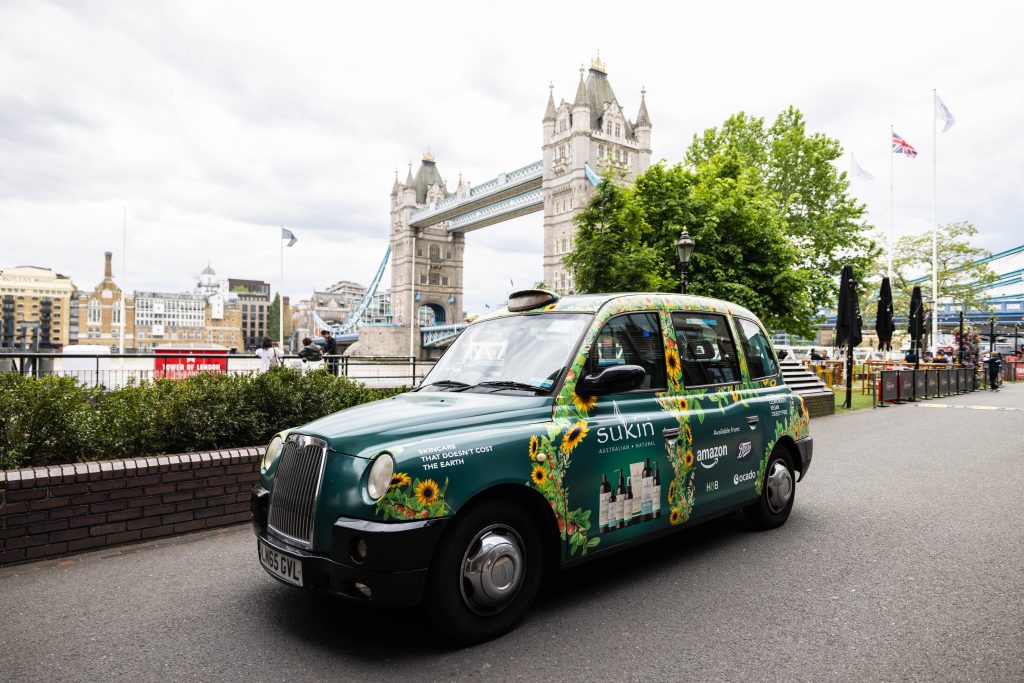
Alongside brevity, three things matter. Make your branding large and unmissable, because an OOH advert that is admired but not attributed is wasted. Use bold, high-contrast design, since Nielsen research links simple, high-contrast creative to markedly better recall. And embrace white space, leaving a good third or more of the design clear, so the eye is not asked to work in an already busy street. This is also where your distinctive brand codes earn their keep. A famous colour or logo can communicate who you are before a single word is read.
Handled well, out of home is one of the most cost-effective ways to build fame and to appear, quite literally, close to the shops that stock you.
Pulling it together
A good advert, then, is rarely an accident. It says one thing clearly. It makes people feel something. It is unmistakably yours, through colour, character and sound. And it plays to the medium it lives in, a sharp headline and clean design in print, a fast hook and a consistent voice on radio, a well-told story on television. None of this requires the budget of a global giant. It requires clear thinking and consistency, which are available to everyone.
Where Hurst Media Agency comes in
Knowing what makes a good advert is one thing. Getting it made, and placed where it will work hardest for a sensible budget, is another. We combine both.
As independent, channel-neutral media brokers, Hurst Media Agency plans and buys across the full UK mix, from national press and radio to television, out of home and digital. Because we have no owned inventory to shift and no bias towards any one format, our advice is shaped by a single question: what is right for your brand and your budget? And through Hurst Media Labs, our in-house studio, we can craft the print, digital and audio-visual creative to the very principles set out above, so your advertising is not only well placed, but genuinely worth seeing and hearing.
Ready to make advertising that works harder?
If you want advertising built on clear thinking rather than a giant budget, we would love to help. Book a free, no-obligation consultation with Hurst Media Agency, and let us show you what the right advert, in the right place, can do for your brand.
Sources and further reading:
- IPA, “The Long and the Short of It,” Les Binet and Peter Field: https://ipa.co.uk/knowledge/publications-reports/the-long-and-the-short-of-it
- Mark Ritson, Marketing Week columns: https://www.marketingweek.com/mark-ritson/
- Jenni Romaniuk and the Ehrenberg-Bass Institute on distinctive brand assets: https://marketingscience.info/news-and-insights/brands-of-distinction
- Distinctive Brand Assets framework (Fame and Uniqueness): https://umbrex.com/resources/frameworks/marketing-frameworks/distinctive-brand-assets-framework-ehrenberg-bass/
- Ipsos on the power of sonic branding, summarised in Forbes: https://www.forbes.com/sites/charlesrtaylor/2026/04/06/sonic-branding-the-most-underused-asset-in-marketing/
- Newsworks effectiveness research: https://newsworks.org.uk/effectiveness/
- Newsworks, “The Power of Print”: https://newsworks.org.uk/research/power-of-print/
- WARC on newspaper effectiveness, via Printpower: https://www.printpower.eu/experts/warc-newspapers/
- Figma, graphic design principles: https://www.figma.com/resource-library/graphic-design-principles/
- Radiocentre, “Creativity” best-practice hub: https://www.radiocentre.org/how-to-do-it/creativity/
- Radiocentre, “Listen Up! Emotion’s Defining Role in Audio Advertising Effectiveness”: https://www.radiocentre.org/wp-content/uploads/2023/10/Listen-Up-FINAL.pdf
- Thinkbox, “Creative Drivers of Effectiveness”: https://www.thinkbox.tv/research/thinkbox-research/creative-drivers-of-effectiveness
- Thinkbox, “A Matter of Time”: https://www.thinkbox.tv/research/thinkbox-research/a-matter-of-time-the-importance-of-time-length-in-tv-advertising